
Gallery
Equipment in service
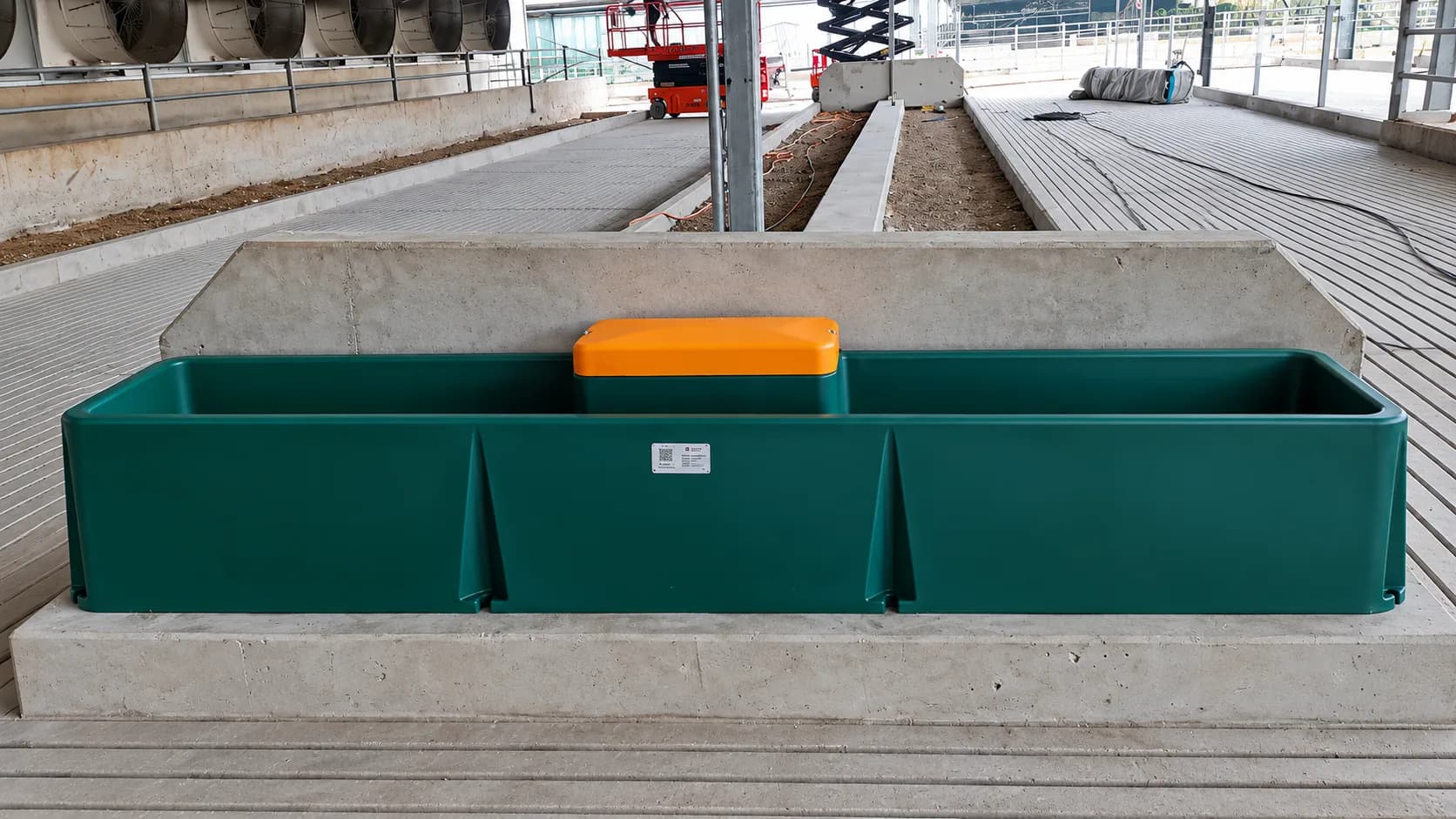
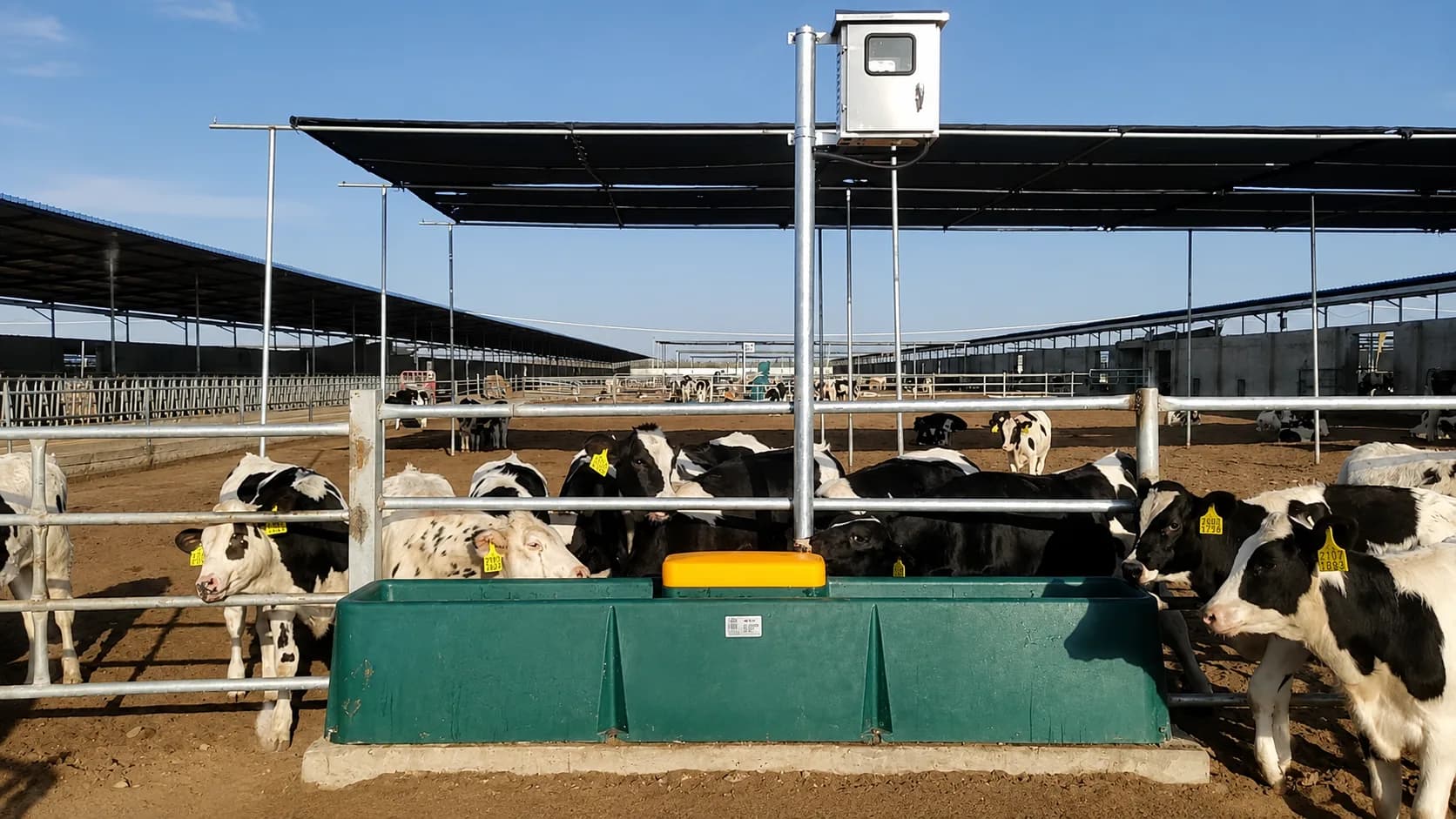
Photographed on working sites: summer and winter operation, and the body shown in cross-section.
01In service
Constant access to water
The float valve holds the set level automatically: water is replenished as it is consumed, without overflow and without manual control.
02Sub-zero temperatures
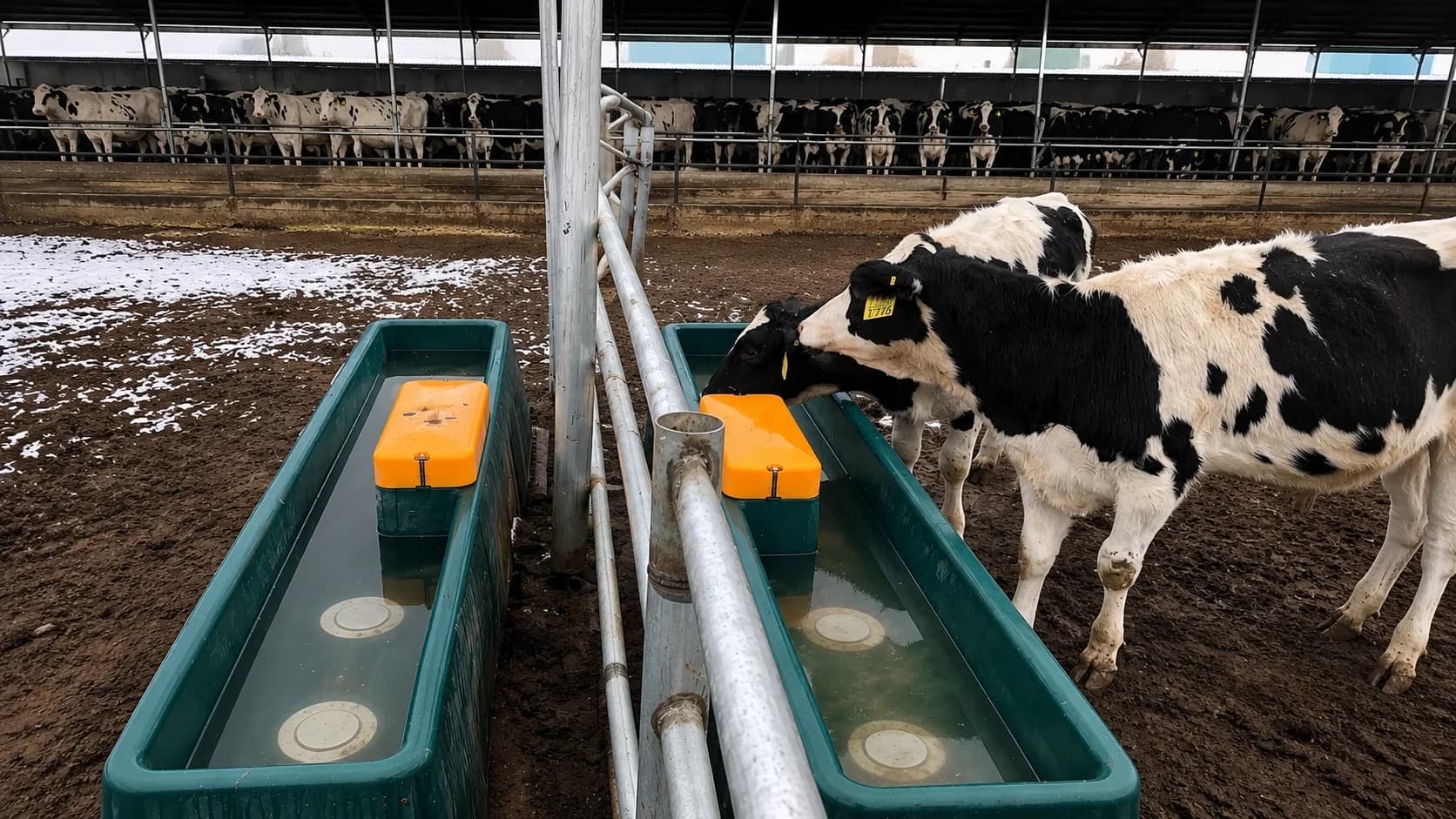
Winter operation
Body insulation keeps the water ice-free in frosts down to −15 °C with no mains supply. For lower temperatures, a 24 V heating element is provided in the valve compartment.
03Water intake
Water intake and productivity
The volume of water consumed is directly linked to milk yield and weight gain, yet it is planned for less often than the feed component.
Limits of open drinkers
An open drinker has two critical seasons: in summer the water warms and blooms, in winter it freezes over. In both cases actual intake falls below requirement.
How an insulated drinker is built
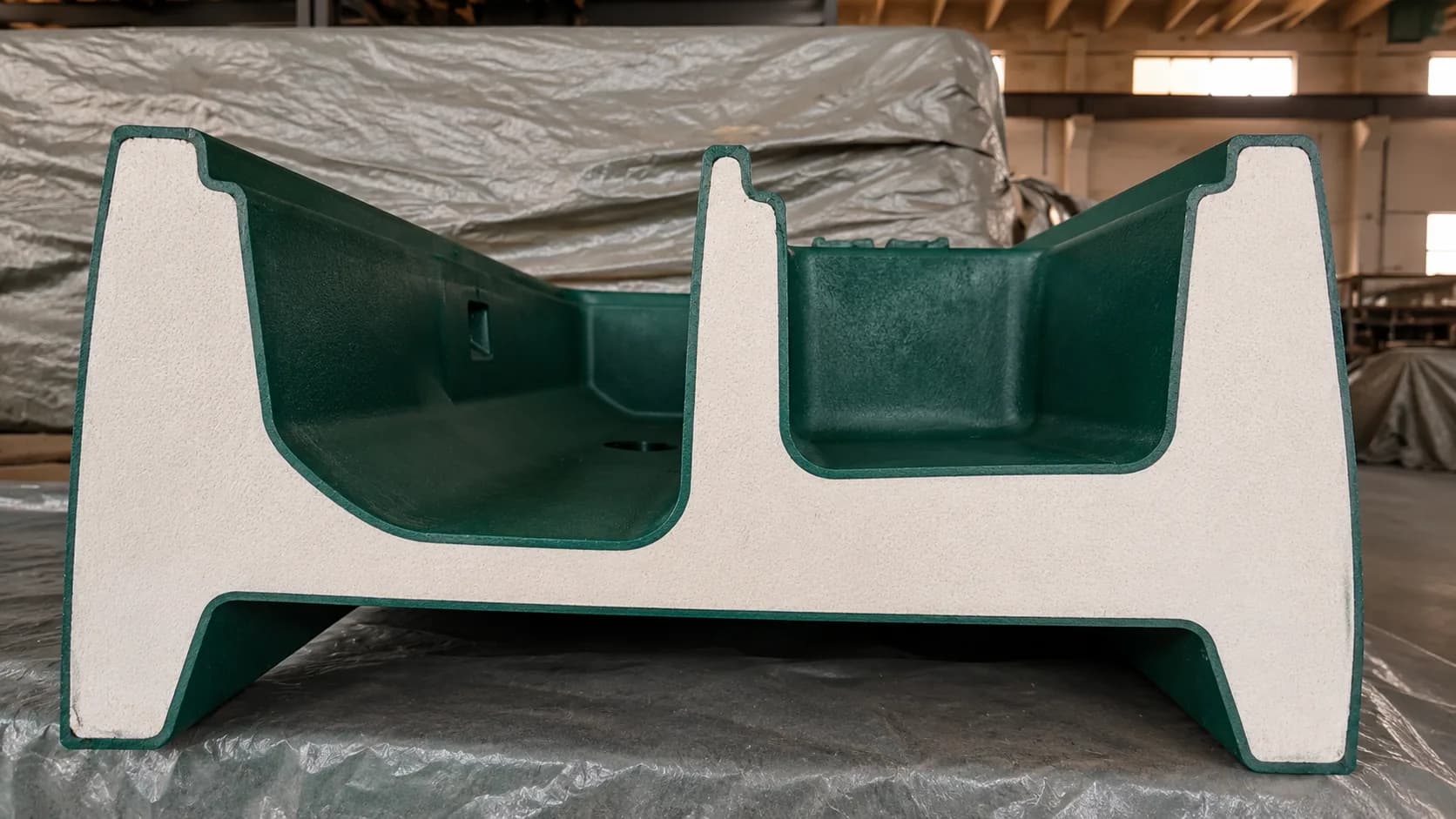
A 50–60 mm layer of polyurethane foam runs between the two walls of the body: in summer it limits the warming of the water, in winter it keeps it ice-free down to −15 °C with no mains supply. A float valve in a closed compartment replenishes the water as it is consumed. In harder frost a 24 V heating element is fitted in the valve compartment — down to −30 °C.
The result
Water at drinking temperature throughout the year and steady access to it in any weather. Maintenance comes down to rinsing the vessel periodically.
- Ice-free down to −15 °C with no mains supply
- 24 V heating element: water at 15–20 °C in hard frost
- Float valve in a closed compartment, out of reach of animals
- One-piece moulded body with no welded or bonded joints
- One construction across the range: from 15 to 405 L
04Construction
How the body is built
A continuous layer of polyurethane foam runs between the outer and inner wall across the whole body. The insulation limits heat exchange between the water and the surroundings.
The body is moulded as a single part — a high-strength construction with no welded or bonded joints. The float valve sits in a separate closed compartment.
05Applications
Where the equipment works
Stable, open pen, sub-zero temperatures — and finished bodies before dispatch.
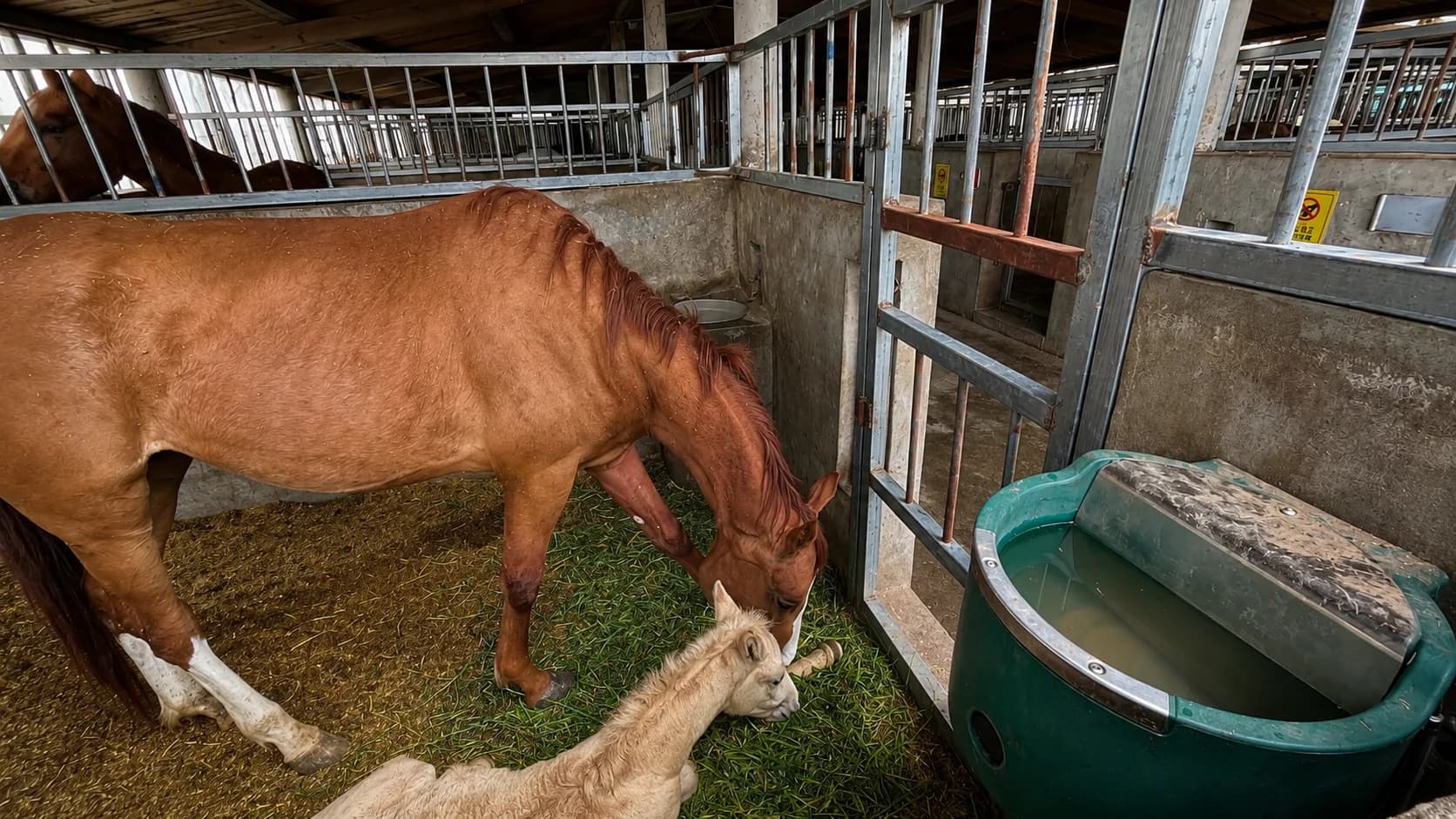
Watering horses in a stable 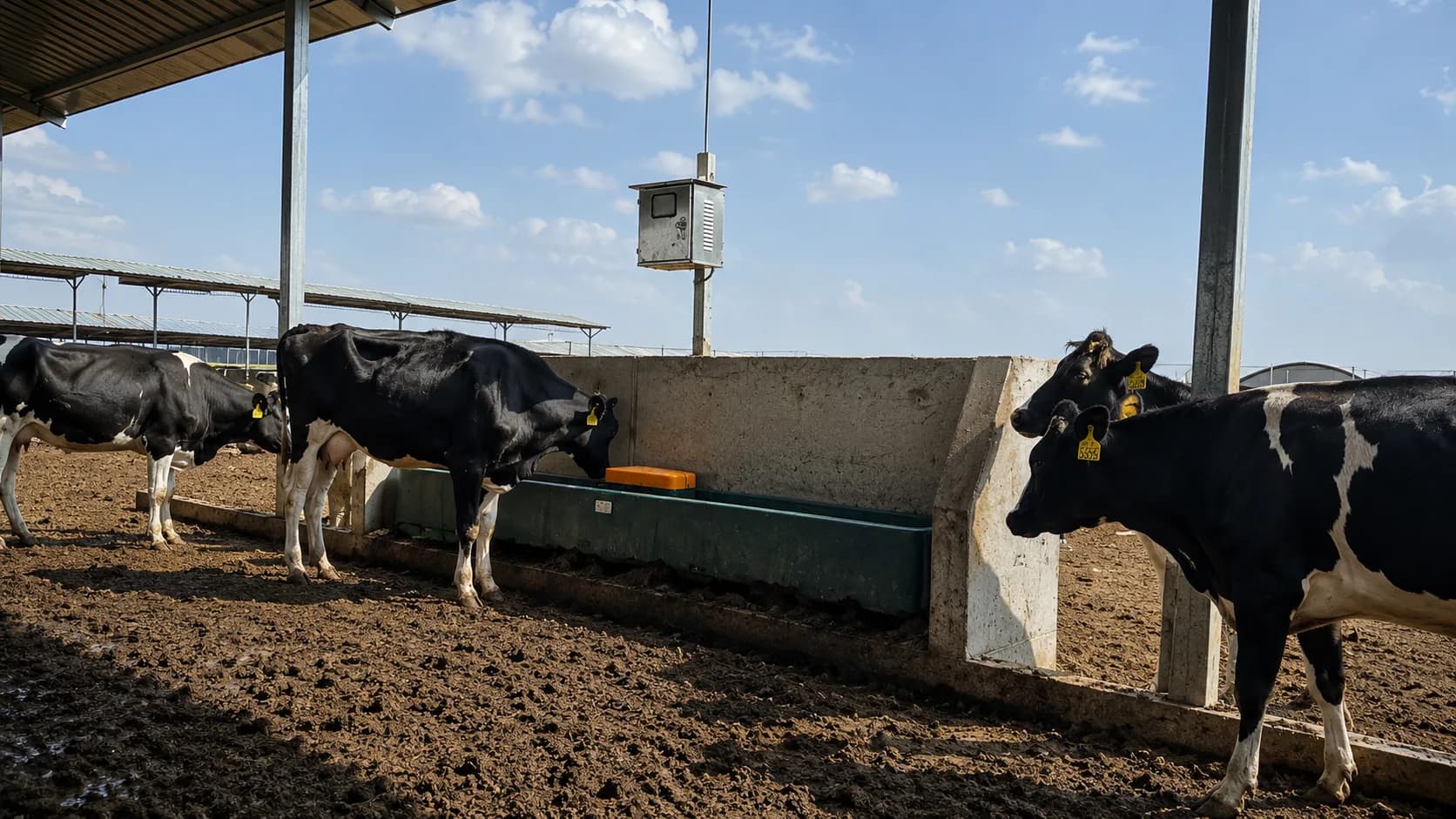
Trough drinker in an open pen 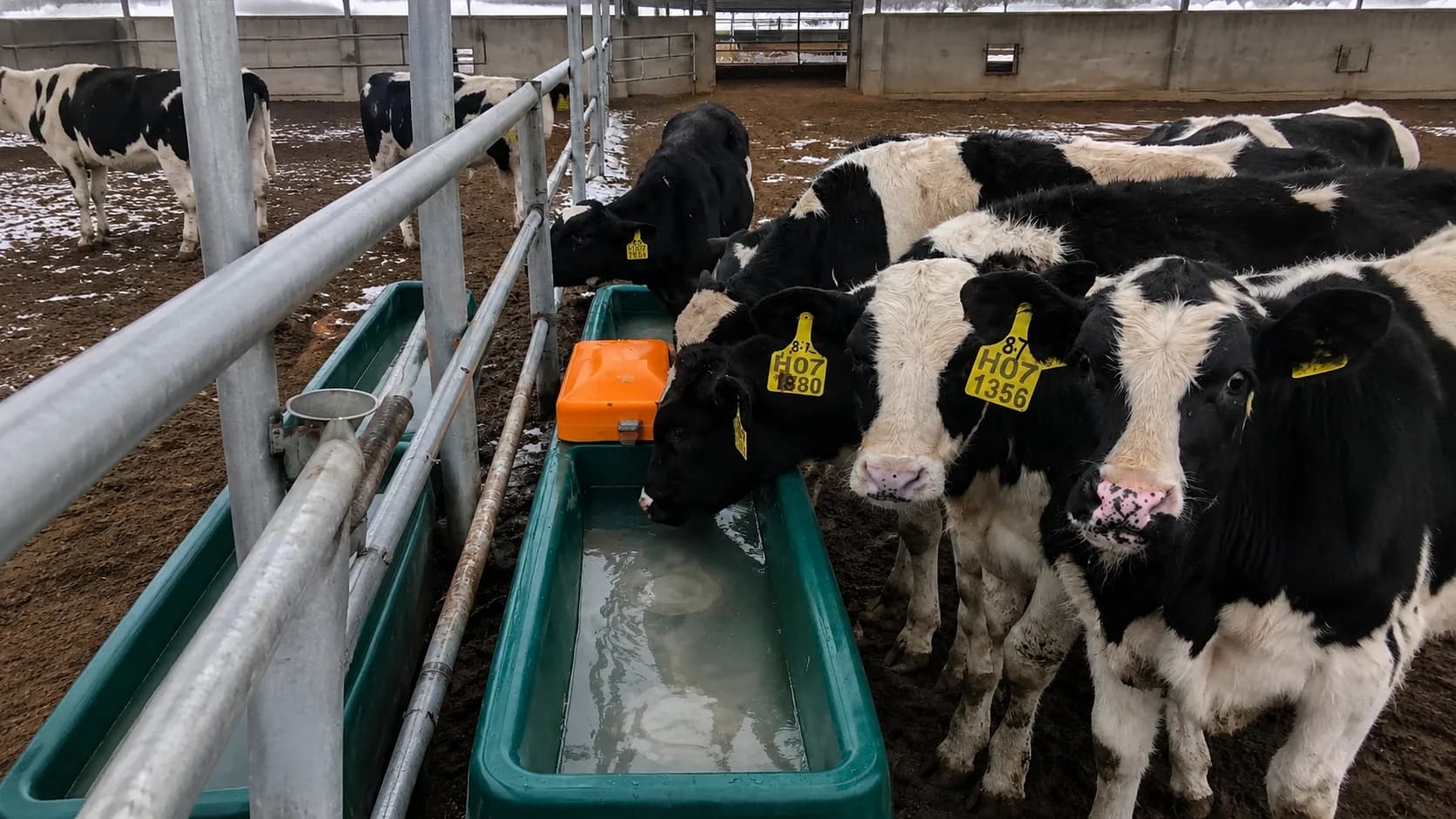
Drinking in sub-zero temperatures 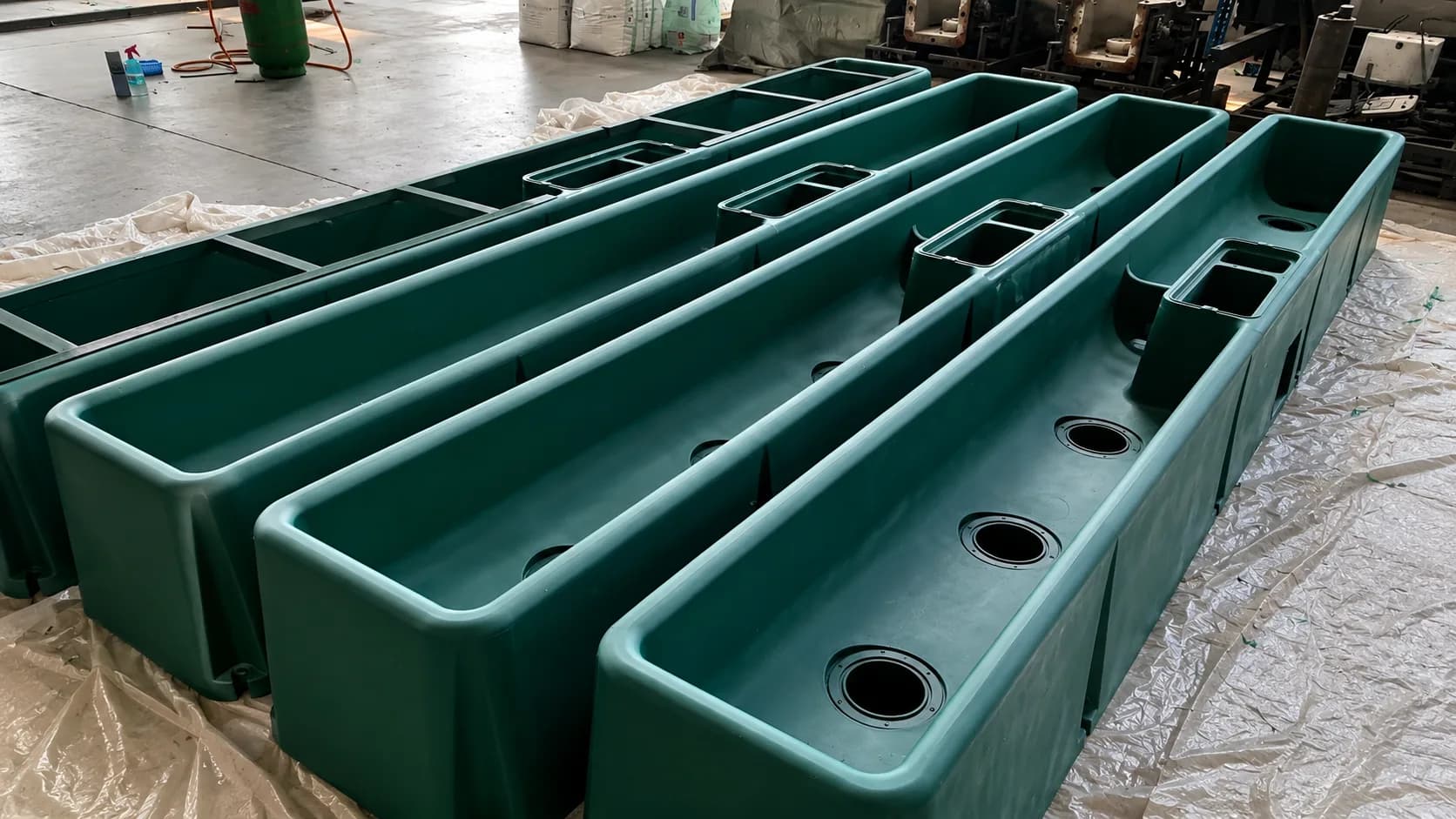
Group trough bodies before dispatch